Understanding Serverless Architecture: A Comprehensive Guide
Understanding Serverless Architecture: A Comprehensive Guide Serverless Architecture is reshaping how we approach software development by eliminating the need for traditional server management. With t...

Understanding Serverless Architecture: A Comprehensive Guide
Serverless Architecture is reshaping how we approach software development by eliminating the need for traditional server management. With this innovative approach, developers can focus on writing code while the platform automatically handles the infrastructure, scaling, and maintenance behind the scenes. This article deciphers the intricacies of Serverless Architecture, exploring its core principles and offering insights into its transformative impact on modern computing.
We'll uncover the tangible benefits and the challenges you might encounter along the way. From real-time data processing and microservices to its cooperation with DevOps practices, this guide delivers a detailed understanding of how Serverless Architecture fits into the current tech ecosystem. Additionally, we'll touch on exciting developments, such as Kraken’s initiative to apply serverless solutions for sustainable energy management. By the end, you’ll appreciate why Serverless Architecture stands as a key player in the journey towards efficient, growth-ready, and eco-friendly computing.
What is Serverless Architecture?
Serverless architecture is an innovative model in cloud computing that allows developers to build and run applications without the complexities of traditional server management. This method shifts the focus from server provisioning to code execution, streamlining the application development process.
Definition of Serverless Architecture
Serverless architecture, often synonymous with serverless computing, refers to a cloud computing model where the cloud provider dynamically manages the allocation of machine resources. Unlike traditional setups that require extensive infrastructure management, serverless architecture empowers developers to concentrate solely on writing code. This model eliminates the need for dedicated server provisioning, allowing applications to scale automatically based on demand.
How Serverless Architecture Works
The functionality of serverless architecture is deeply rooted in the principles of cloud computing. It involves deploying functions that are executed in response to events. These functions, often referred to as Functions as a Service (FaaS), are triggered by events such as HTTP requests or database updates. This event-driven model ensures that resources are only consumed when necessary, potentially reducing costs. However, users must be aware of potential latency issues due to cold starts and the learning curve involved in integrating serverless solutions with existing systems.
Key Components of Serverless Architecture
Key components of serverless architecture include FaaS, Backend as a Service (BaaS), and event triggers. FaaS allows developers to execute code in response to events without managing servers. BaaS offers ready-to-use backend services, reducing time to market for applications. Event triggers, such as database changes or user actions, activate these functions, ensuring integrated operation. Despite the advantages, there are risks like vendor lock-in and security challenges in multi-tenant environments. It’s crucial to conduct a detailed cost analysis when considering a shift to serverless to ensure alignment with business goals.
| Feature | Traditional Architecture | Serverless Architecture |
|---|---|---|
| Server Management | Required | Not Required |
| Scaling | Manual | Automatic |
| Cost Structure | Fixed Costs | Pay-as-you-go |
Serverless architecture, with its focus on code execution and application development efficiency, is transforming the way developers approach building applications. However, understanding its intricacies and potential limitations is vital for successful implementation.
Benefits of Serverless Architecture
Serverless architecture offers a transformative approach to building applications by removing the need for server provisioning and management. This shift allows developers to focus on code and innovation, streamlining the application development process. Below are some key benefits, including cost efficiency, scalability, and faster application development.

A detailed view of a blue lit computer server rack in a data center showcasing technology and hardware. (Foto: panumas nikhomkhai / Pexels)
Cost Efficiency
One of the most touted advantages of serverless architecture is its potential for cost efficiency. By eliminating the need for dedicated server provisioning and infrastructure management, businesses can significantly reduce overhead costs. However, actual savings can often depend on usage patterns. For applications with unpredictable or spiky traffic, serverless can be financially advantageous as you pay only for the compute time you consume. It's essential to conduct a detailed cost analysis to understand potential savings in comparison to traditional architecture. Despite potential gains, companies must also weigh risks like vendor lock-in and hidden costs in execution environments.
Scalability
Serverless architecture inherently supports scalability. Applications can automatically scale up or down in response to demand, which is particularly beneficial for dynamic workloads. With serverless, the cloud provider manages scaling, allowing developers to focus on writing code. However, while often marketed as unlimited, it's crucial to recognize potential bottlenecks. Some applications may experience latency issues during cold starts, which can affect performance. Moreover, the integration of serverless within a microservices architecture can further enhance scalability, providing a flexible and modular approach to application development.
Faster Application Development
Developers benefit from faster application development cycles with serverless architecture. By reducing the burden of infrastructure management, teams can concentrate on coding and feature delivery. This focus can accelerate time-to-market, giving companies a competitive edge. Yet, it's important to acknowledge the learning curve associated with serverless technologies. Successful implementation often requires new skills, particularly in areas like event-driven programming and cloud service integration.
- Key considerations for serverless architecture:
- Understand scalability limitations - Address potential latency and security concerns - Assess vendor lock-in risks - Apply microservices for enhanced flexibility - Prepare for a learning curve in new technologies
Expert Opinion: "Serverless architecture can significantly streamline development processes, but organizations must carefully evaluate both the benefits and challenges to fully use its potential."
To summarize, the benefits of serverless architecture are clear, but it's important to approach this technology with a comprehensive understanding of both its advantages and limitations.
Challenges of Serverless Architecture
summary
While serverless architecture offers significant benefits, it also presents distinct challenges. These include potential vendor lock-in, security concerns, and difficulties in monitoring and logging. Understanding these challenges is crucial for businesses considering serverless architecture as part of their infrastructure management strategy.

A focused software engineer working on a laptop in a server room, reflecting dedication in tech. (Foto: Christina Morillo / Pexels)
Vendor Lock-in
Vendor lock-in is a major concern in serverless architecture. When organizations rely heavily on a specific cloud provider's managed services, they may face difficulties migrating to another provider due to proprietary technologies and APIs. Such dependency restricts flexibility, making it a critical consideration for businesses that value adaptability. It's essential to evaluate the long-term implications of vendor lock-in when integrating serverless solutions with existing systems and frameworks like microservices architecture.
Security Concerns
Security concerns are inherent in serverless environments due to the shared nature of cloud resources. The multi-tenancy model can lead to vulnerabilities, as different applications share the same execution environment. Additionally, cold starts can introduce latency issues, potentially impacting performance. Organizations must implement strong security practices to mitigate these risks, such as encryption and regular security audits. It's crucial to understand that while serverless architecture simplifies infrastructure management, it also demands vigilant security oversight.
Monitoring and Logging
Monitoring and logging in serverless architecture can be more complex compared to traditional setups. Due to the event-driven architecture of serverless, tracking the flow of data and identifying issues requires specialized tools and approaches. Traditional logging methods may not suffice, and businesses must invest in advanced solutions to ensure effective monitoring. Despite the scalability serverless architecture offers, maintaining visibility into system performance remains a challenge. Properly addressing these challenges enables organizations to employ the full potential of serverless technology.
| Aspect | Traditional Architecture | Serverless Architecture |
|---|---|---|
| Vendor Lock-in | Less prone | High risk |
| Security | Controlled environment | Multi-tenant risks |
| Monitoring/Logging | Established tools | Requires new solutions |
By acknowledging these challenges and implementing strategic measures, organizations can navigate the complexities of serverless architecture effectively.
Key Use Cases for Serverless Architecture
Serverless architecture offers versatile solutions for developers, enabling efficient application scaling and reducing infrastructure burdens. This section explores key applications where serverless architecture shines, including web applications, mobile backends, and data processing tasks.
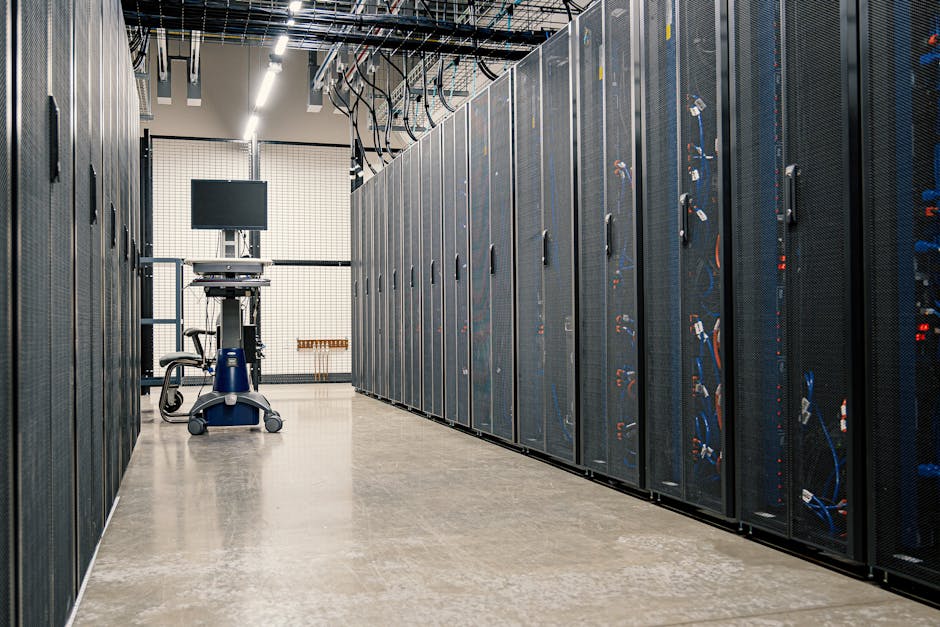
Modern data center corridor with server racks and computer equipment. Ideal for technology and IT concepts. (Foto: Brett Sayles / Pexels)
Web Applications
Serverless architecture is particularly beneficial for web applications, allowing developers to focus on application development without the complexities of server management. By utilizing an event-driven architecture, these applications can often handle spikes in user activity, which may help ensure unified performance. With the integration of managed services, developers can automate various tasks, enhancing both speed and reliability. However, while serverless offers cost efficiency, it is crucial to assess potential latency issues, such as cold starts, that might affect user experience.
Mobile Backends
In the realm of mobile applications, serverless architecture simplifies backend development, providing a stable solution for managing user data and authentication processes. This approach allows for dynamic application scaling, adapting to fluctuating demands without manual intervention. Mobile developers can benefit from the reduced overhead and focused devops practices, which streamline the deployment process. Nonetheless, attention must be given to potential vendor lock-in, as reliance on specific cloud providers can limit future flexibility.
Data Processing Tasks
Serverless architecture excels in executing data processing tasks, particularly those that are event-triggered. By using an event-driven architecture, tasks such as real-time data analytics or batch processing can be executed efficiently and cost-effectively. The ability to scale automatically ensures that resources are used only as needed, optimizing cost efficiency. Despite these advantages, the complexity of integrating serverless solutions with existing systems should not be underestimated, requiring a thorough understanding of both the benefits and the potential pitfalls, as further explored in self-healing AI automation workflows.
Caution: While serverless architecture simplifies application development, it is essential to consider the learning curve and potential security concerns associated with multi-tenancy environments.
Real-time Data Processing with Serverless
Real-time data processing leverages serverless architecture to enhance efficiency and scalability. By utilizing event-driven architecture, applications can handle dynamic workloads and react to data changes instantly. This section explores use cases, tools, and technologies that enable effective real-time processing.

Modern data server room with network racks and cables. (Foto: Brett Sayles / Pexels)
Event-driven Architecture
In the realm of serverless architecture, event-driven architecture plays a pivotal role by enabling systems to respond to events as they occur. This approach allows applications to generally achieve higher levels of cost efficiency since resources are often allocated only when events trigger functions. By offloading the need for constant infrastructure management, developers can integrate real-time capabilities without friction into their applications. However, integrating this architecture demands an understanding of API management and how different components communicate within the cloud ecosystem.
Use Cases for Real-time Processing
Real-time data processing with serverless architecture finds its application in various domains. Some common use cases include:
- IoT data processing: Handling streams of data from IoT devices for instant analysis.
- Fraud detection: Analyzing transactions in real-time to identify and prevent fraudulent activities.
- Social media monitoring: Tracking and analyzing social media interactions as they happen.
- Live updates and notifications: Delivering real-time updates and alerts to users.
- Real-time analytics: Processing and visualizing data instantly for informed decision-making.
These applications highlight the flexibility and power of serverless architecture in addressing dynamic data needs.
Tools and Technologies
Several tools and technologies aid in implementing real-time data processing within a serverless framework. Cloud providers like AWS, Azure, and Google Cloud offer services like AWS Lambda, Azure Functions, and Google Cloud Functions that support serverless deployments. Additionally, tools like Apache Kafka and AWS Kinesis facilitate data streaming and ingestion. By incorporating devops practices, organizations can ensure smooth integration and operation of these technologies, optimizing performance and reliability.
Warning: While serverless architecture offers numerous advantages, developers must address potential latency issues, such as cold starts, and evaluate the risk of vendor lock-in when choosing a cloud provider.
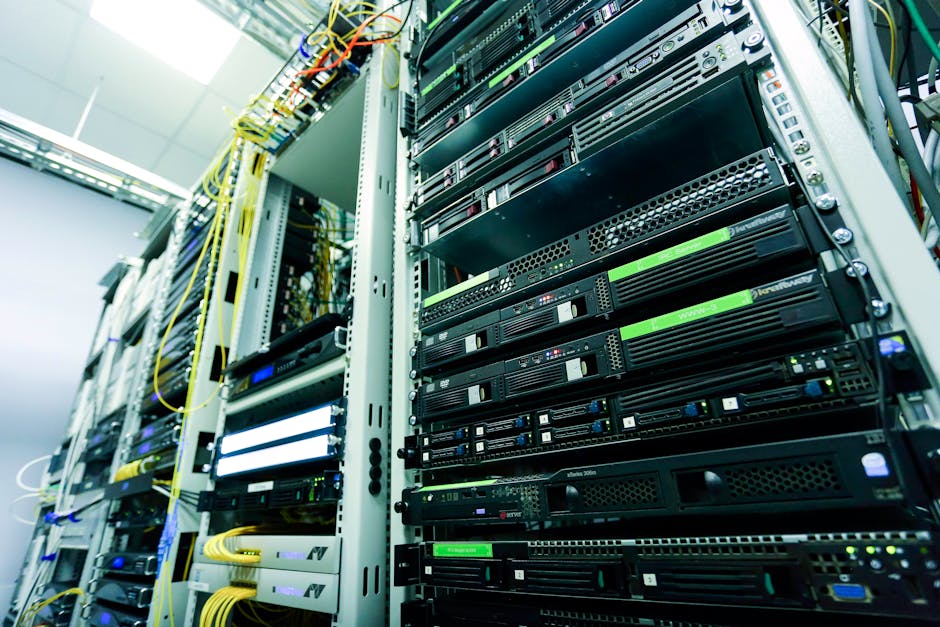
High-tech server rack in a secure data center with network cables and hardware components. (Foto: Sergei Starostin / Pexels)
Microservices Architecture and Serverless
Integrating microservices architecture with serverless architecture offers a powerful combination that enhances application scalability and flexibility. This approach allows for efficient deployment automation and streamlined API management while applying the benefits of serverless computing.
Integration of Microservices
Integrating microservices architecture with serverless architecture creates an efficient system that capitalizes on the strengths of both paradigms. Microservices, which break down applications into smaller, independent services, generally align with serverless computing by allowing each service to be deployed and scaled independently. This integration is facilitated by effective API management, which ensures that different services communicate smoothly. Utilizing a reliable cloud provider is crucial for this setup, as it underpins the infrastructure needed for smooth operation and integration.
In practice, integrating microservices with serverless architecture involves using serverless functions to handle specific tasks within each microservice. This granularity allows developers to write and deploy small units of code that can execute in response to events, streamlining the development process. For example, an e-commerce application might use a serverless function to process payments, while another function handles inventory management, each operating within its own microservice. Effective API management ensures these functions interact smoothly, maintaining the application's overall cohesiveness.
Benefits of Microservices in Serverless
The combination of microservices and serverless architecture offers several benefits for application development. Firstly, it enables deployment automation, which significantly reduces the time and effort required to launch and update applications. This automation leads to faster time-to-market, allowing businesses to remain competitive. Additionally, serverless computing provides automatic scaling, ensuring that applications can handle varying loads without manual intervention. Key advantages include:
- Improved infrastructure management due to reduced server maintenance.
- Increased developer focus on writing code rather than managing servers.
- Enhanced scalability and flexibility for dynamic applications.
- Reduction in operational costs is often noted, though this can vary based on usage.
- Mitigation of latency issues by optimizing cold starts.
In addition, serverless architecture inherently supports a pay-as-you-go model, which can lead to cost savings. By only paying for the compute time consumed, organizations can optimize their budgets effectively. This is particularly beneficial for startups and small businesses that need to manage costs carefully while scaling their operations. The combination of serverless computing with microservices architecture provides a strong framework for building resilient applications that can adapt to changing demands.
In summary, integrating microservices architecture with serverless architecture offers a solid framework for modern application development, optimizing both performance and operational efficiency. This combined effect allows organizations to use the full potential of serverless architecture while remaining adaptable and responsive to market demands. By embracing this integration, businesses can innovate rapidly, deploying new features and services with agility and precision.
DevOps Practices in Serverless Architecture
Incorporating DevOps practices into serverless architecture can enhance efficiency and collaboration. These practices streamline continuous integration and deployment, optimize collaboration through automation, and ensure effective monitoring of serverless applications.
Continuous Integration and Deployment
In serverless architecture, continuous integration and deployment (CI/CD) are vital for maintaining smooth application development. By implementing solid CI/CD pipelines, teams can automate the deployment of code, reducing the risks associated with manual errors. This deployment automation not only accelerates the release cycle but also ensures that applications are consistently updated in response to user feedback. Serverless computing enhances this process by providing the necessary infrastructure management capabilities without the burden of managing servers, allowing developers to focus on writing efficient code.
Collaboration and Automation
Collaboration is fundamental in the DevOps ecosystem, especially within serverless architecture. By applying automation tools, teams can achieve greater synchronization and efficiency. Automated processes facilitate better resource allocation, ensuring that team members are focused on tasks that maximize productivity. Moreover, serverless computing enables teams to collaborate without the constraints of traditional server management, fostering an environment where innovation thrives. To understand how automation tools can further enhance collaboration, explore AI Workflow Automation Tools.
Tip: Use cloud-native tools to streamline collaboration and minimize manual intervention.
Monitoring Serverless Applications
Effective monitoring is crucial for maintaining optimal performance in serverless architecture. Unlike traditional systems, where infrastructure management requires hands-on oversight, serverless computing offers built-in monitoring tools that provide real-time insights into application performance. These tools can help identify bottlenecks in application scaling and address potential latency issues. However, it's important to be aware of challenges such as vendor lock-in and security concerns, which can impact the success of serverless implementations. Regularly reviewing and adapting monitoring strategies ensures that your applications remain resilient and responsive to changing demands.
By integrating these DevOps practices, organizations can activate the full potential of serverless architecture, achieving a harmonious balance between innovation, efficiency, and reliability.
Conclusion
To summarize, serverless architecture offers a transformative approach to cloud computing, emphasizing efficiency in resource allocation and facilitating unified application scaling. This modern paradigm shifts the focus from infrastructure management to innovation and agility, providing businesses with the ability to respond swiftly to changing demands and technological advancements.
Enhanced Resource Allocation
Serverless architecture fundamentally changes how resources are managed, allowing businesses to optimize resource allocation without the burden of infrastructure management. By abstracting the underlying servers, companies can deploy applications swiftly, focusing on innovation rather than hardware concerns. This shift empowers developers to concentrate on application development, enhancing productivity and creativity. For example, a startup can launch its application globally without worrying about setting up physical servers in different regions. However, potential users must conduct a detailed cost analysis to understand the financial implications, as cost savings can generally vary based on specific usage patterns. The pay-as-you-go pricing model of serverless architecture can be advantageous but requires careful monitoring to prevent unexpected expenses.
Unified Application Scaling
The automatic scaling capabilities of serverless architecture ensure that applications can handle varying loads without manual intervention. This scalability is not entirely limitless, as certain bottlenecks or limitations might arise, especially if not properly configured. For instance, an e-commerce platform experiencing a sudden spike in traffic during a sale can benefit from serverless architecture's ability to scale resources in real-time, ensuring a smooth customer experience. Yet, the ability to scale applications dynamically aligns with business needs, offering a competitive edge in rapidly changing markets. Moreover, this flexibility allows businesses to experiment with new features and services without the risk of over-provisioning resources.
Navigating Challenges
Despite its advantages, serverless architecture comes with challenges, such as potential vendor lock-in and latency issues due to cold starts. Security concerns, particularly regarding multi-tenancy, also warrant careful consideration. Organizations must weigh these risks against the benefits, ensuring they have the necessary skills and understanding to implement serverless solutions effectively. For example, businesses should evaluate different providers to mitigate vendor lock-in and invest in security measures to protect data integrity. Understanding the operational nuances of serverless architecture is crucial for utilizing its full potential while minimizing associated risks.
Final Thoughts
Incorporating serverless architecture into your tech stack can significantly enhance operational efficiency and speed up time to market. Yet, it's crucial to approach this technology with a balanced perspective, acknowledging both its potential and its limitations. As the cloud computing ecosystem evolves, serverless architecture continues to offer exciting possibilities for those willing to embrace its dynamic nature and address the associated challenges head-on. By staying informed about the latest developments and best practices in serverless technology, businesses can harness its power to drive innovation and maintain a competitive edge in the digital age.
Frequently Asked Questions
What is Serverless Architecture?
Serverless Architecture is a cloud-computing execution model where the cloud provider dynamically manages the allocation of machine resources. Despite the name, it does not mean there are no servers; instead, it abstracts the complexity of server management from the users, allowing developers to focus on writing code.
How does Serverless Architecture differ from traditional cloud hosting?
In traditional cloud hosting, developers need to manage and maintain server infrastructure, while in Serverless Architecture, the cloud provider takes care of the server management. This allows for automatic scaling, reduced operational overhead, and a pay-as-you-go pricing model, ensuring cost-effectiveness.
What are the benefits of using Serverless Architecture?
Serverless Architecture offers several benefits, including automatic scaling, reduced infrastructure management, and a cost-effective pay-per-use billing model. It enables developers to deploy applications quickly and efficiently, focusing on code rather than managing servers.
Can Serverless Architecture be used for all types of applications?
While Serverless Architecture is suitable for many applications, especially those with variable workloads, it may not be ideal for all scenarios. Applications requiring consistent server uptime or extensive control over the environment might not benefit as much from a serverless approach.
What are some common use cases for Serverless Architecture?
Common use cases for Serverless Architecture include event-driven applications, such as data streaming, image processing, and real-time file transformation. It is also frequently used for backend services like APIs, mobile backends, and microservices, where scaling and cost efficiency are priorities.
Conclusion
Understanding Serverless Architecture is crucial for modern developers seeking to optimize application development. This cloud computing model empowers developers by eliminating the need for server management, allowing a focus on innovation and efficiency. Serverless Architecture offers automatic scaling, cost efficiency, and faster development cycles, making it ideal for businesses with fluctuating traffic. However, challenges such as vendor lock-in and security concerns must be addressed to ensure a flexible and secure infrastructure. By integrating microservices and DevOps practices, Serverless Architecture enhances scalability and streamlines deployment, fostering rapid global application growth. As businesses continue to prioritize innovation, embracing Serverless Architecture could be a transformative step. Explore the potential of Serverless Architecture today to drive your projects forward efficiently and effectively.
Generated using GeckoAuthority, prioritizing informational integrity.
Stay Updated
Get the latest SaaS and AI tool reviews delivered to your inbox weekly.


